
Blog/Outdoor lighting
IP65 vs IP67 Outdoor LED Lights: Which Waterproof Rating Should You Choose?
Learn the difference between IP65 and IP67 outdoor LED lights. Choose suitable waterproof lighting for gardens, buildings and outdoor spaces in Pakistan.
When choosing outdoor LED lights, brightness and design are important, but protection against environmental conditions is equally essential.
Outdoor lighting fixtures may be exposed to rain, dust, humidity, irrigation systems and other environmental factors.
This is why manufacturers specify an IP rating for many outdoor electrical products.
Two commonly encountered ratings are IP65 and IP67.
Although both offer protection against dust and water, they are designed for different exposure conditions.
Understanding these ratings can help homeowners, electricians, architects and commercial buyers choose suitable outdoor LED lighting fixtures.
1. What Is an IP Rating?
IP stands for Ingress Protection.
The IP rating system, defined by IEC 60529, indicates the degree of protection an enclosure provides against the entry of solid objects and water.
An IP rating generally consists of two digits.
The first digit indicates protection against solid objects such as dust.
The second digit indicates protection against water.
For example, in an IP65-rated fixture:
- The number 6 indicates a dust-tight enclosure.
- The number 5 indicates protection against water jets under specified test conditions.
Understanding both digits is important when selecting outdoor electrical equipment.
2. What Does IP65 Mean?
IP65-rated LED lights are dust-tight and protected against water jets.
This makes them suitable for many outdoor installations where fixtures may encounter rain, dust and occasional water exposure.
Common applications include:
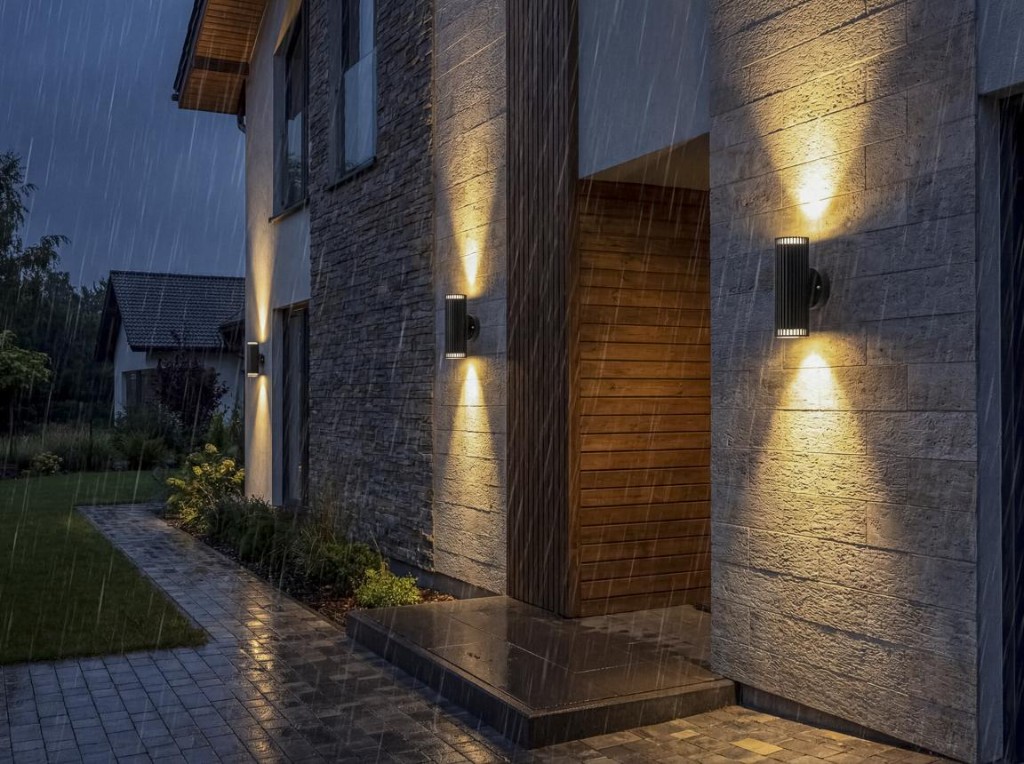
- Outdoor wall lighting
- Garden spotlights
- Building entrances
- Covered or exposed pathways
- Architectural facade lighting
- Selected outdoor floodlight installations
However, IP65 does not mean that a fixture can be submerged in water.
The installation method and manufacturer's instructions must also be considered.
3. What Does IP67 Mean?
IP67-rated fixtures are dust-tight and protected against temporary immersion in water under defined test conditions.
They may be appropriate for applications where temporary water accumulation or immersion is a realistic concern.
Examples can include certain in-ground lighting installations and other specialized outdoor applications.
However, IP67 does not automatically mean that a fixture is suitable for permanent underwater installation.
Fixtures intended for continuous immersion generally require protection and specifications appropriate to that application, often involving IP68-rated equipment.
4. IP65 vs IP67: Key Differences
| Feature | IP65 | IP67 |
|---|---|---|
| Dust Protection | Dust-tight | Dust-tight |
| Water Protection | Water jets | Temporary immersion |
| Typical Applications | Wall lights, garden lights, floodlights | Certain in-ground or immersion-risk installations |
| Continuous Underwater Use | No | No |
| Installation Requirements | Follow manufacturer guidance | Follow manufacturer guidance |
An important detail is that IP67 immersion protection does not automatically certify a fixture for every water-jet exposure condition. Where both types of exposure are relevant, check whether the manufacturer provides combined ratings or additional test information.
5. Which IP Rating Is Best for Garden Lights?
For many exposed garden lighting applications, IP65 can provide suitable protection.
However, fixtures installed close to the ground may encounter irrigation water, pooling or drainage problems.
In these cases, a different protection rating or installation design may be necessary.
In-ground lights require particular attention because water can accumulate around the fixture housing.
Selecting the correct IP rating should therefore be part of a wider installation assessment.
6. Choosing Outdoor Lights for Pakistan's Climate
Different regions of Pakistan experience different environmental conditions.
In Karachi, coastal humidity and salt exposure can increase corrosion risks.
In Lahore, seasonal rain and dust can affect outdoor equipment.
In Islamabad and northern areas, rainfall, moisture and seasonal temperature changes may influence fixture selection.
Besides the IP rating, consider:
- Corrosion-resistant materials
- Suitable electrical connections
- Proper cable glands and seals
- Drainage around recessed fixtures
- Temperature and environmental ratings
- Manufacturer installation instructions
A high IP rating alone does not guarantee long-term performance if the fixture is incorrectly installed.
7. Why Fixture Quality Matters
The durability of outdoor LED lighting depends on more than its enclosure rating.
Housing quality, electrical drivers, seals, thermal management and installation methods all contribute to overall reliability.
When comparing outdoor fixtures, review the technical datasheet rather than relying only on promotional descriptions.
FIAM Pakistan offers outdoor lighting series for different applications, allowing customers to compare available models and their specifications.
Conclusion
Understanding the difference between IP65 and IP67 helps buyers make informed outdoor lighting decisions.
IP65 is commonly used for weather-exposed fixtures, while IP67 offers protection against temporary immersion under defined conditions.
The correct choice depends on the installation location, environmental exposure and manufacturer specifications.
Explore the FIAM Lighting Catalog to compare outdoor LED lighting solutions for residential and commercial projects.
Frequently Asked Questions
Is IP65 waterproof?
IP65 provides protection against water jets under specified test conditions. It does not indicate suitability for submersion.
Can IP67 lights be installed underwater?
IP67 covers temporary immersion under specified conditions, not permanent underwater operation.
Which rating is better for outdoor wall lights?
IP65 is commonly suitable for many exposed outdoor wall lighting applications, provided the fixture and installation meet the environmental requirements.
Does a higher IP rating mean better LED quality?
Not necessarily. IP ratings describe enclosure protection, not light output, electrical efficiency, driver quality or overall durability.